Showing posts with label Alzheimer's. Show all posts

Friday, March 17, 2017

The Scottish Homes Presents: Hand Massage “Touch” Therapy Workshop

The Scottish Homes Presents: Hand Massage “Touch” Therapy Workshop
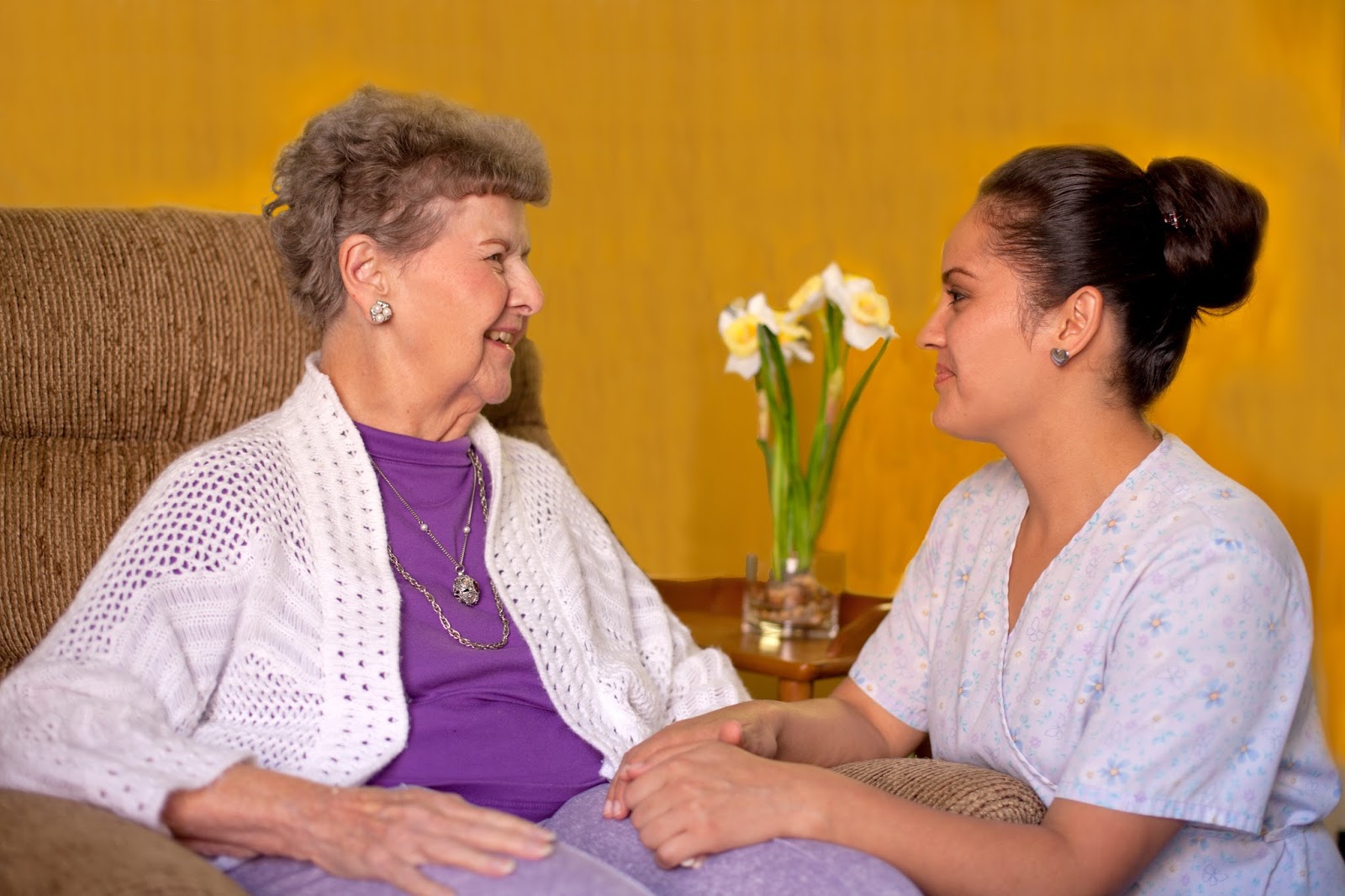
Physical touch is a sensation that human beings crave from birth. Infants cuddle their mothers, children hug their parents and friends and family members regularly embrace to provide a sense of security and closeness. Even a kind touch on the shoulder or a gentle hold of a hand helps people feel more connected and less lonely. Senior citizen’s living in retirement communities are especially receptive to the benefits of human interaction and touch.

The Secret Touch
Research has suggested that providing touch-therapy to elderly residents, in particular those suffer from Alzheimer’s and dementia, can have a drastic, positive effect on their mood, demeanor and health. Touch and massage therapy are some of the oldest non-invasive therapies in the world and generally focuses on using human touch along with calming essential oils to provide pressure and stimulation to muscles in the body. In the book, Care Through Touch, the author says that “touch is a natural and therapeutic way of being with the elderly . . . touch and its life-enhancing benefits are too frequently denied the elderly in our culture."

Social & Physical Healing
Senior communities can often create a sense of isolation or loneliness for residents. Through touch therapy practices, experts and properly trained family members can create a better, more full life for individuals in the senior community. Regular human contact from family members, friends and peers can help maintain a positive, connected mindset for seniors. Aside from the obvious social benefits, the practice of touch therapy can create an immense improvement in seniors’ overall health. Massage and touch therapy has been reported to:

- Relieve sore muscles -Help with arthritic pain -Improve circulation -Enhance digestive and respiratory system functionality -Improve circulation -Stimulate the nervous system -Help normalize appetite, sleep, and mood -Speed up postoperative recovery time.

Join Us
At The Scottish Home, we strive to provide a sense of living for our residents resembling that of a warm and welcoming home. We believe that touch therapy and massage can provide miraculous benefits to our residents which is why we are hosting a “Hand Massage Touch Therapy Workshop” for those curious about proper technique and its benefits for seniors. The session is $55 and attendees will receive a workbook, certificate of completion and a gift of essential oils. Learn more by viewing the event on Facebook or visit our site to learn more about senior living options at The Scottish Home. 

Monday, February 20, 2017

What to Say When the Memory Fades

Communicating with someone who is diagnosed with Alzheimer's can be an emotionally challenging situation. Alzheimer’s disease and dementia steal away stories and details that were once easily accessible and make everyday communication difficult. These changes happen in three stages (referred to as mild, moderate and severe Alzheimer’s disease) and take understanding, patience and good listening skills to deal with. For those experiencing Alzheimer’s, these changes can be scary and extremely frustrating. Effective communication can help put those with dementia or Alzheimer’s at ease.

Mayra Ligeza, from the Alzheimer's Association, recently presented a Brunch Series at The Scottish Home that examined “Effective Communication Strategies.” She explained, “communication is more than just talking and listening – it’s also about sending and receiving messages through attitude, tone of voice, facial expressions and body language. As people with Alzheimer’s disease and other dementias progress in their journey and the ability to use words is lost, families need new ways to connect. Learning to decode the verbal and behavioral messages delivered by someone with dementia or Alzheimer’s can help you connect and communicate at each stage of the disease.”

A few effective tips for successful communication are:

Mild Alzheimer’s:
●       Don’t exclude them from conversations. Talk directly to them.
●       Take time to listen to how the person is feeling and if they need anything.
●       Be patient and give them time to find the right words and respond. Don’t interrupt or finish their sentences unless they ask for help.

Moderate Alzheimer’s:
●       Keep eye contact. It communicates you are active listening and that you care about what is being said.
●       Speak slowly and clearly.
●       Don’t overwhelm the person with complicated requests. Offer simply, step-by-step instructions.

Severe Alzheimer’s:
●       Promote nonverbal communication, e.g. pointing and gesturing.
●       Utilize touch, sights, sounds, smells and tastes as another way to convey experience.
●       Remember - it is OK if you don’t know what to say. The most important thing is your friendship and presence.

Looking for more tips? We highly recommend exploring the Alzheimer’s Association's webpage. They have a host of resources and information, including more tips on effective communication strategies: https://www.alz.org/care/dementia-communication-tips.asp

The Scottish Home regularly hosts events with expert presenters that examine issues involving elder care; including our regular Memory Care Brunch Series, every 2nd Friday of the month, from 9am - 11am. We would love it if you could join us. Check our Facebook page or website for upcoming events. Call Rebecca Drennan to RSVP: 708-447-5092.

Wednesday, October 19, 2016

The Differences Between Dementia and Alzheimer’s: What You Need to Know

Dementia and Alzheimer’s disease are often thought of as the same thing. Although the symptoms of both conditions can appear similar, their underlying causes and treatment methods can be quite different. Alzheimer’s patients often exhibit dementia, but not all people who deal with dementia have Alzheimer’s disease.

The main difference between these two common conditions is that dementia is a group of symptoms, whereas Alzheimer’s is a progressive disease with a formal diagnosis. By contrast, dementia is a syndrome, meaning it is not a formal disease, but rather a set of symptoms that point to an underlying, separate cause.


Symptoms of Dementia
Some of the symptoms of dementia include:
  • Impaired language and communication
  • Memory loss
  • Foggy thinking

Symptoms of Alzheimer’s can include the symptoms of dementia listed above, as well as:
  • Behavioral changes
  • Short-term memory loss (inability to recall what was just said)
  • Disorientation
  • Depression and apathy
  • Progressive decline in ability to walk, speak, or care for oneself

Symptoms of Alzheimer's
Alzheimer’s is one of the biggest causes of dementia, but people affected by Parkinson’s disease, Huntington’s disease, stroke and vascular diseases, nutritional and metabolic disorders, or drug interactions may also exhibit dementia without having Alzheimer’s. Whereas Alzheimer’s causes a specific form of dementia, there are many types of dementia, caused by other forms of damage to different areas of the brain.

It is important to understand the difference between dementia and Alzheimer’s because treatment methods and the prognoses for the two conditions can vary. For cases of dementia, identifying the root cause determines the plan of treatment. Some forms of dementia can be alleviated by treating the root cause of the problem, especially in cases of metabolic disorders and drug effects. In cases of vascular disorders, prevention of further damage, such as future strokes, may prevent an escalation of dementia symptoms.

If the underlying cause of dementia is Alzheimer’s disease, the focus becomes management of symptoms. Some treatment strategies include boosting brain function, using sleep and depression medications, and treating memory loss with pharmaceuticals. Those dealing with dementia and/or Alzheimer’s disease can benefit from supportive services and memory care.   


Located in North Riverside, Illinois, we at The Scottish Home understand the challenges and difficulties of memory loss, dementia, and Alzheimer’s disease. For over 100 years, we have been providing personalized care to seniors. Our services include residential and respite care, as well as “Best in Class” memory support care at our brand-new Caledonia House. The Scottish Home is where friends become family. Contact us or visit our website to learn more about what makes our family of staff, residents, relatives, and community members so special.  

Wednesday, August 31, 2016

7 Signs of Alzheimer’s and How The Caledonian House Can Help

7 Signs of Alzheimer’s and How The Caledonian House Can Help
Alzheimer’s is a form of severe dementia that progresses over time, with a gradual increase in symptoms such as forgetfulness, disorientation, and disruptive behavior. Alzheimer’s is a fatal disease that attacks the brain, and although there is no cure yet, early detection and treatment can slow its progress and extend quality of life for both patients and caregivers.

Most people wait far too long to recognize or seek treatment for Alzheimer’s, by which point, damaging lesions have already spread through the brain, and it is too late to maximize the benefits of treatment strategies. A timely diagnosis, specialized memory care, healthy diet, physical and cognitive exercise, social stimulation, and even medication can help stave off the progression of Alzheimer’s.

According to the Alzheimer’s Association, here are some early warning signs of Alzheimer’s disease:
  • Forgetting recently learned information
  • Poor judgment and decision making
  • Difficulty concentrating or completing familiar tasks
  • Trouble speaking or holding a conversation
  • Frequently misplacing or losing items
  • Withdrawal from social activities with friends and family
  • Changes in mood and personality

If your loved one is exhibiting these symptoms, see their physician as soon as possible.

At The Scottish Home, we are pleased and excited to feature our enhanced memory care facility, The Caledonian House. We know that memory loss is never easy but we hope to make the transition to assisted living as smooth as possible for all involved. This new facility is our response to the challenges of Alzheimer’s disease and other dementias. Each of the Caledonian House’s two floors will be home to 10 residents in which they can enjoy private bedrooms, full bathrooms and a community space for lounging, cooking and dining. In addition to a home-like setting, the Caledonian House also provides the best care possible for residents in need of skilled nursing and memory care.

The Scottish Home is currently accepting new residents at The Caledonian House! If you are interested in learning more about our facility, set up a tour with our team by calling 708-447- 5092.

Monday, December 21, 2015

Caledonian House

2015 has been an incredible year for the Illinois Saint Andrew Society. Our supporters have recognized that there is something very special about this organization and they have given passionately and generously to encourage and enable us to accomplish our mission. We are truly grateful for the commitment of our Scottish community. Thank you.

One very special highlight of the year is that construction on our new building is well underway. For many years, we dreamed of enhancing our Scottish Home campus by building a new residence for people living with Alzheimer’s disease and other forms of dementia. On May 12th 2015, our dream became a reality. We broke ground and began to build the Caledonian House. Designed as a home rather than an institution, the Caledonian House will offer state-of-the art memory care whilst remaining true to the Scottish Home’s heritage of being a place where friends become family.

We invite you to watch our new video and learn more about the Caledonian House and what makes its thoughtful design and person-centered memory care so important.

Many have already made contributions to help build the Caledonian House. We appreciate the support very much and hope that donors are inspired to offer their continued commitment. We would like to share one example that illustrates the power of philanthropy and the necessity of our bold, innovative response to Alzheimer’s disease.


Last year, Barry and MaryAnn MacLean, longtime members of the Society, chose to support the Caledonian House with a transformational gift of $1 million. Their extraordinary philanthropy enabled us to begin construction. And incredibly, after seeing our recent progress on the building, they have increased their pledge from $1 million to $1.5 million. We are deeply grateful to the MacLeans for their investment and humbly gratified by the confidence it represents.

On behalf of the MacLean family, our Board and all the families – past, present and future – whose lives are enriched by the Scottish Home and soon the Caledonian House, we invite you to join us in our battle against Alzheimer’s disease.

You can join us in the battle against Alzheimer’s disease by making a tax-deductible donation to the Caledonian House or on their website.

If you are looking for care and are interested in learning more about the Scottish Home and the Caledonian House, please contact Becky Drennan at 708-426-7175 or email her.